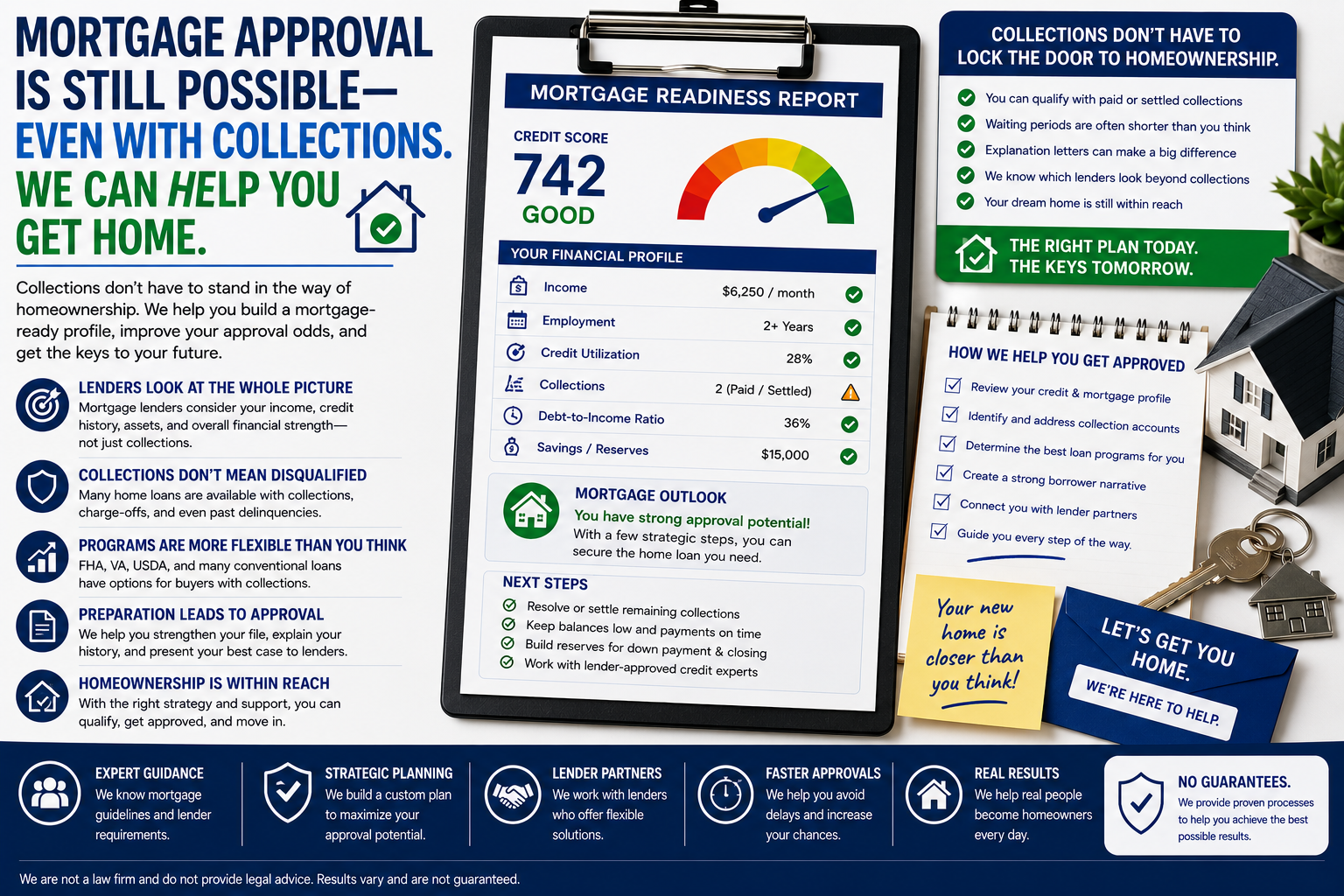
Track every pay-over-time obligation before mortgage preapproval so the household budget and credit file contain fewer surprises.
Buy now pay later services can make a purchase feel easier by dividing the cost into smaller scheduled payments. The mortgage problem is not the checkout method by itself. The issue is whether the buyer understands the remaining obligation, protects cash flow, avoids missed payments, and can explain the account if the lender asks.
This guide is written for new homeowners managing the first months after closing. It focuses on avoiding immediate debt stacking while adjusting to repairs, utilities, insurance, and the new housing payment. The purpose is to create a practical preparation plan without promising that a score will rise, a negative item will be removed, or a mortgage will be approved.
A new homeowner finances furniture, appliances, and repairs through several apps during the first month after closing. A complete mortgage-readiness review turns that situation into specific balances, dates, documents, budget decisions, and lender questions.
Why BNPL after mortgage closing belongs in the mortgage plan
A lender evaluates the borrower’s financial profile as a whole. Credit scores are important, but underwriting may also consider current debts, income, employment, account stability, recent inquiries, bank statements, available funds, reserves, and the property being financed. A BNPL obligation can affect several of those areas at once.
Small payments are easy to underestimate. A household may have separate plans for furniture, repairs, electronics, clothing, medical expenses, or travel. When the plans are divided among different apps and due dates, the family may know each payment individually but still miss the combined monthly total.
The safest rule is to treat any remaining payment as debt during mortgage preparation. Record the provider, original amount, current balance, installment amount, next due date, final due date, funding source, and whether the account appears on a credit report.
The purchase may have been necessary. Mortgage preparation is not about judging the purchase. It is about making the obligation visible, affordable, accurately reported, and easy to document.
Review the credit reports and account records together
BNPL reporting can differ by provider, product, and bureau. One account may appear as an installment tradeline. Another may create an inquiry. Another may not appear until the account becomes delinquent or moves to collections. A free score app may not display every detail.
Review all available credit reports and compare them with the provider’s account history. Check the company name, balance, payment history, open or closed status, dates, and comments. Look for duplicate entries, unfamiliar accounts, incorrect late dates, paid balances that have not updated, or a collection listed in addition to the original obligation.
A reporting difference is not automatically an error. The buyer should first understand what each entry represents. When the information appears inaccurate, incomplete, duplicated, outdated, misleading, or unfamiliar, gather records and prepare a specific dispute.
Useful records
- Original agreement and payment schedule.
- Current and final account statements.
- Bank records showing payments.
- Payoff or settlement confirmation.
- Collection letters and account notices.
- Identity documents for an unfamiliar account.
- Copies of disputes and investigation results.
Connect the account to the complete homebuying budget
Mortgage readiness includes more than the down payment. Buyers may need money for earnest money, inspections, appraisal charges, insurance, taxes, association dues, deposits, moving, repairs, and emergency reserves. A series of installment deductions can weaken those funds without looking like one major purchase.
Create a calendar showing income deposits, BNPL deductions, credit card payments, student loans, auto loans, rent, utilities, insurance, and savings transfers. Review which payments fall in the same week. Keep a buffer in the account used for autopay so that one unexpected expense does not create a failed withdrawal.
A payoff decision should not be made in isolation. Paying an active plan may simplify the file, but using every available dollar can leave the buyer unable to cover closing or emergency costs. The lender can explain whether the payment must be counted and what documentation may be needed.
A new homeowner finances furniture, appliances, and repairs through several apps during the first month after closing. The written budget should show how the buyer plans to handle that exact situation without relying on new debt.
How the lender may review the issue
The lender can learn about BNPL activity through credit reports, bank statements, application disclosures, updated credit checks, payoff letters, and requested account statements. Borrowers should not assume that an account is irrelevant simply because it is absent from one report.
An underwriter may ask whether the payment is recurring, whether the balance is current, whether a recent late payment occurred, whether the account is disputed, or whether a collection is connected to the same debt. The lender may request a written explanation and documents supporting the borrower’s answer.
Clear documentation is safer than guessing. A borrower should know the current balance, final payment date, account status, and whether the account changed after the original mortgage application. New financing before closing can require additional review.
The lender—not a credit repair company—decides how the obligation affects qualification. The role of credit preparation is to help make the file accurate, organized, stable, and easier to explain.
A step-by-step action plan
Step 1: Inventory every obligation
List active and recently completed plans, including accounts that do not appear on the credit reports. Add the combined weekly and monthly payment total.
Step 2: Compare reports with provider records
Check balances, dates, status, late-payment history, collection reporting, and inquiries. Save the reports used for the review.
Step 3: Protect cash flow
Keep enough money in the funding account, avoid unnecessary new plans, and preserve closing and reserve funds. Review upcoming deductions before major homebuying expenses.
Step 4: Correct questionable reporting
Use a specific dispute supported by records when information appears inaccurate, incomplete, duplicated, outdated, misleading, or unfamiliar. Do not dispute accurate items simply because they are negative.
Step 5: Save proof of every change
Keep payoff letters, zero-balance statements, updated reports, settlement records, and lender correspondence. Do not rely only on an app screenshot.
Step 6: Ask lender-specific questions
Ask whether the payment must be counted, whether the account needs to be paid, how disputes are handled, and what proof is required before final approval.
Common mistakes to avoid
Assuming small means invisible
A small payment can still matter when it is active, repeated, undisclosed, late, or combined with other debts.
Opening new plans after preapproval
The lender may update the credit or debt review before closing. New obligations can create conditions or delays.
Deleting records after payoff
Save final statements. The report may update slowly, and the lender may need proof sooner.
Using closing funds to solve every balance
Balance debt reduction with the cash needed for inspections, appraisal costs, insurance, moving, and reserves.
Using future post URLs before they exist
Only currently published, verified pages should be linked inside live content. Planned article relationships should remain recommendations until the destination page is published and checked.
A 90-day preparation timeline
Days 1–30: Build visibility
Gather the agreements, statements, credit reports, collection notices, and bank records. Build one list showing every balance and payment date.
Days 31–60: Stabilize the file
Continue required payments, avoid unnecessary new financing, protect the autopay account, and submit specific disputes where the reporting appears questionable.
Days 61–90: Prepare for underwriting
Review updated reports, confirm balances, save payoff documents, and prepare factual explanations for recurring payments. Ask the lender which obligations must be included.
The timeline may be adjusted to the buyer’s actual mortgage schedule. The goal is not an overnight score change. The goal is a file that is accurate, stable, documented, and understandable.
How to prepare a lender-ready explanation for this issue
A useful explanation should be short, factual, and supported by documents. Start with the account name, the reason the purchase was financed, the original amount, the current balance, the scheduled payment, and the expected payoff date. Explain whether the account is current, paid, disputed, or in collection. Avoid emotional language or guesses. The underwriter needs a clear timeline more than a long story.
When the issue involves a late payment or failed autopay, include the date, what caused the problem, whether the payment was later completed, and what changed to prevent another failure. Supporting records may include bank statements, payment confirmations, account notices, or a final payoff letter. A temporary problem should be described honestly without promising that it can never happen again.
When the issue involves an incorrect balance, duplicate account, unfamiliar obligation, or outdated status, identify the specific reporting problem and attach the records that support the correction request. Keep the mortgage lender informed when an active dispute or investigation could affect the timing of the file. A screenshot may help, but a complete statement or written response is usually stronger evidence.
The explanation should also connect the account to the current budget. Show that the buyer knows the remaining payments, has included them in the monthly plan, and has protected funds for inspections, appraisal charges, insurance, closing, moving, and reserves. The goal is to demonstrate organization and transparency, not to minimize the obligation.
Long-term credit habits after the immediate mortgage issue is addressed
Mortgage preparation should not end when one BNPL account is paid or corrected. A stronger long-term profile depends on consistent on-time payments, manageable revolving balances, limited unnecessary applications, accurate personal information, and a budget that does not rely on repeated short-term financing for routine expenses.
Review utilization on every credit card, not just the card with the highest balance. Keep due dates visible, confirm that payments cleared, and save records when an account is settled or closed. Check credit reports periodically for duplicate collections, incorrect late payments, unfamiliar addresses, and accounts that should show a zero balance.
New homeowners often face immediate spending pressure for furniture, appliances, repairs, deposits, and maintenance. Creating a post-closing spending plan can prevent the household from replacing a cleaned-up BNPL problem with several new obligations. Prioritize urgent needs, compare the full purchase price rather than only the installment amount, and preserve an emergency fund.
Credit rebuilding is gradual. A stable file built through accurate reporting and responsible habits is more valuable than a temporary score change created by rushed decisions. Superior Credit Repair Online can help consumers review reporting and organize next steps, but the consumer’s ongoing payment and budgeting behavior remains an essential part of the process.
People Also Ask
How can BNPL after mortgage closing appear during underwriting?It may appear through a credit report, account statement, bank withdrawal, application disclosure, updated credit check, or a document request from the underwriter.Can a lender ask about a small recurring payment?Yes. The size of the payment is only one factor. The lender may need to understand whether the obligation is active, recurring, accurately disclosed, and relevant to the debt calculation.What should a borrower document?Keep the agreement, payment schedule, current statement, bank records, payoff confirmation, collection letters, dispute correspondence, and any updated credit report.Should a buyer open new BNPL plans before closing?A conservative approach is to avoid unnecessary new obligations as preapproval and closing approach because the lender may update the credit and debt review.
Verified Superior Credit Repair Online resources
The links below were confirmed as published pages before this batch was created. No unpublished post slugs are inserted into this article.
- Superior Credit Repair Online
- Nationwide credit repair services
- BNPL credit repair guidance
- Credit repair frequently asked questions
Public credit education resources
- CFPB guidance on credit scores and mortgages
- CFPB guidance on disputing credit-report errors
- Federal Trade Commission credit education
- USA.gov credit-report and score resources
How Superior Credit Repair Online supports mortgage readiness
Superior Credit Repair Online helps consumers review collections, late payments, charge-offs, high utilization, medical collections, identity-related errors, and other reporting concerns connected to mortgage preparation. The process is educational and documentation-based.
For new homeowners managing the first months after closing, a structured review can help identify what appears questionable, what records are missing, which balances need attention, and what habits should improve before a lender reviews the file.
No credit repair service can guarantee deletion, a certain score, or mortgage approval. Outcomes depend on the reporting, evidence, bureau investigations, creditor responses, lender requirements, and the consumer’s ongoing behavior.
Frequently Asked Questions
Can BNPL after mortgage closing affect mortgage approval?It can matter when the issue changes a monthly obligation, cash reserves, recent payment history, credit reporting, bank-statement activity, or the documentation available to the lender. The effect depends on the complete file and the lender’s requirements.Will every BNPL obligation appear on all three credit reports?No. Reporting can vary by provider, product, timing, and bureau. Borrowers should review all available reports and separately track every active obligation.Should inaccurate BNPL information be disputed before applying?Questionable information should be reviewed early. A dispute should identify a specific accuracy, completeness, duplication, identity, status, or verification concern and include supporting records when available.Does paying off the account guarantee a higher score?No. A payoff may simplify the current debt picture, but it does not guarantee deletion, a particular score change, or mortgage approval. Keep payoff records and verify how the account updates.Does Superior Credit Repair Online guarantee mortgage approval?No. The company helps consumers review reporting, organize documentation, dispute questionable information where appropriate, and build responsible credit habits. The lender makes the mortgage decision.
Was this guide helpful?
Superior Credit Repair Online provides educational credit guidance for individuals and families preparing for buying a home, applying for a mortgage, refinancing, or rebuilding after credit challenges.
If this information helped you better understand your credit report or next steps, you are welcome to share honest feedback about your experience. https://superiorcreditrepaironline.com/local/bnpl-and-post-closing-credit-stability-for-new-homeowners/
Comments
Post a Comment